Vanuatu’s only female Member of Parliament (MP) and former Deputy Mayor of Port Vila, Marie Louise Milne, has shared her journey into politics, highlighting the challenges women continue to face in public life while calling for fair, accurate and professional media coverage of women in leadership.
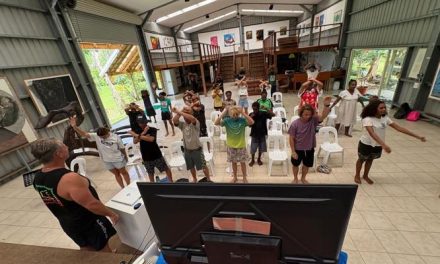
Milne shared her experience during a presentation to journalists and media representatives as part of regional gender training, reflecting on her political career, experiences as a woman in public office and the importance of media representation.
She acknowledged what she described as a positive experience with the media in Vanuatu, saying journalists had generally treated her statements, political positions and public work fairly and professionally.
“My positions have been reported accurately, my voice has been given space, and I have not felt that my agenda defined how I was covered,” Milne said.
She acknowledged that this may not be the experience of every woman involved in public life, either in Vanuatu or elsewhere in the Pacific.
Milne said fair and accurate reporting was important because it helped build trust between politicians and the public and allowed public debate to focus on policies and issues rather than gender or personality.
She said the standard of fair reporting should apply to everyone involved in political life and should not be treated as an exception.
Milne encouraged journalists and political leaders to continue strengthening professional standards, particularly as more women consider contesting public office, including upcoming municipal elections.
She said her experience in politics had also demonstrated the importance of women supporting one another and recognising that women in leadership were not seeking to replace men but to contribute to decision-making on behalf of the wider population.
“We are not here to take the place of the men. We are here because we represent part of the population, and we are here to help take the right decisions,” she said.
Milne said she had also benefited from the support of men and traditional leaders who believed in women’s leadership.
She acknowledged the chiefs and community members who supported her political journey, saying it had not been a journey she undertook alone.
“I am working with some chiefs and some men who believe in women’s leadership, who believe that a woman also has a role and a voice at that table to make decisions,” she said.
From a farmer’s daughter to Parliament
Milne also shared the story of her upbringing and how her family influenced her path in life.
She said she was the daughter of a farmer and grew up between rural and urban environments.
She recalled how her father would wake up at around 3am to travel to town to sell produce from the family farm.
Her family eventually moved closer to town because of the distance children had to travel to attend school.
Milne said her father strongly encouraged her education and wanted her to become a doctor.
He supported her schooling and later sent her to New Caledonia to continue her studies.
However, her life took a different direction after she became involved in politics.
Milne said she first discussed the decision with her parents, with her mother initially expressing concern about her entering politics.
Her father, however, supported her decision and encouraged her to follow her own path.
She eventually became involved with the Green Confederation, joining its executive committee and becoming increasingly engaged in political activities.
Milne said her political involvement was driven in part by her belief in climate change, sustainable development and the challenges facing Vanuatu and the wider Pacific region.
She initially considered contesting elections at the national level but was encouraged to begin with municipal politics.
She subsequently stood in municipal elections before continuing her political journey towards national leadership.
Milne said her political career had also been influenced by her husband, who is a former prime minister.
She recalled that when she first became involved in politics, some people continued to identify her through her husband rather than recognising her independently as a political figure.
However, she said perceptions were gradually changing as she established her own identity and voice in politics.
“Now the trend is changing. Now it is becoming MP,” she said, describing the gradual shift in how people viewed her political role.
Speaking up in Parliament
Milne said entering Parliament had strengthened her determination to speak openly about issues affecting her constituents.
She said she had become particularly vocal on issues such as road conditions, healthcare and public services.
She explained that she believed remaining silent in Parliament would prevent her constituents’ concerns from being properly raised.
Milne said she had therefore made it a priority to stand up and speak whenever she believed issues affecting the people needed to be addressed.
She said she intended to continue advocating for her constituents and working to improve conditions for the people she represents.
Challenges during election campaign
Milne also spoke openly about the challenges she faced during her campaign for the national election.
She recalled attending an open campaign where she stood to present her policies while chiefs supporting her stood alongside her.
During the campaign, an older man challenged her decision to contest the election.
According to Milne, the man questioned why she was seeking political office and told her that women should remain in the kitchen rather than participate in politics.
Milne said she chose not to respond directly, while members of the chiefs and community who supported her spoke on her behalf.
She said the incident demonstrated that traditional perceptions about the role of women remained strong in some communities.
“Some people still have our culture standing strong, but women should be able to participate,” she said.
Milne said another challenge she encountered was criticism over her decision to contest an election while her husband was also involved in politics.
She said some people questioned why both of them should seek political positions at the same time, reflecting another perception that political leadership should primarily be held by men.
However, she said she remained committed to her decision to stand for election.
Women supporting women
Milne also recalled an incident during a campaign in which another woman publicly challenged the argument being made against her.
She described the intervention as an example of how women can support one another during political campaigns and public debates.
Milne said the experience demonstrated that women themselves could play an important role in challenging stereotypes and defending women’s participation in leadership.
She said her journey had shown that women could bring their own experiences, skills and perspectives to political decision-making.
Milne also used the image of a bird to describe the importance of women being able to rise and reach their full potential.
She said she had learned from regional colleagues that when only one part of a bird’s wing is represented, it cannot fly properly.
For her, the message was a reminder that societies need the contributions of both women and men to move forward.
Call for inclusive media coverage
Milne said the media has an important role to play in ensuring women in politics are represented fairly and that their policies and ideas receive the same attention as those of their male counterparts.
She urged journalists to continue focusing on political substance and avoid allowing gender differences to overshadow the qualifications, experience and skills of women seeking public office.
Her comments come as Vanuatu and other Pacific countries continue to encourage greater participation of women in political leadership.
Milne said she hoped the dialogue between journalists and political leaders would build on positive practices already taking place and strengthen standards for reporting women in public life.
She encouraged journalists to recognise their responsibility in shaping public perceptions and ensuring women’s voices are heard.
Milne said her own political journey had involved challenges, but also strong support from community leaders, family members and others who believed in women’s leadership.
The MP said her experience demonstrated that women entering politics should not be viewed as competing against men, but as contributing additional voices and perspectives to decisions affecting society.
She said she would continue using her position in Parliament to speak on issues affecting her constituents and encourage greater recognition of women’s leadership in Vanuatu.
SOURCE: VANUATU DAILY POST