
The government, through the Ministry of Health (MOH), has renewed its commitment to eliminate cervical cancer and protect future generations through a national strategy in partnership with the World Health Organization (WHO).
Elimination of cervical cancer is included as a key activity under the Reproductive, Maternal, Newborn, Child, and Adolescent Health (RMNCAH) program in the Family Health Unit of the new MOH Corporate Plan 2026–2030.
The ministry has brought together a National Cervical Cancer Elimination Project Working Group to create a clear, evidence-based plan. This plan follows the WHO “90-70-90” targets, which aim to have 90 percent of girls fully vaccinated by age 15, 70 percent of women screened by ages 35 and 45, and 90 percent of women with cervical disease receiving proper treatment.
Cervical cancer is mainly caused by certain types of the Human Papillomavirus (HPV). Since late 2022, Vanuatu has greatly increased cervical cancer screening and prevention efforts.
Through the Eliminating Cervical Cancer in the Western Pacific project, the ministry has worked with the Vanuatu Family Health Association and Australian partners to roll out a national HPV screening program.
As a result, thousands of women across the country have been screened. In SHEFA, over 5,200 women were screened, with more than 1,200 testing positive for HPV. In SANMA, over 4,500 women were screened, with 774 positive results. PENAMA screened nearly 2,500 women, MALAMPA more than 2,200 women, and TAFEA over 1,200 women. These screenings have helped identify high-risk HPV types, including HPV 16 and HPV 18/45, which are major causes of cervical cancer.
Alongside screening, Vanuatu launched a national HPV vaccination program in June 2023 for girls aged 9 to 14 years. The goal is to reach 90 percent coverage so girls are protected from HPV before they are exposed to the virus later in life.
Vanuatu is also using modern and affordable technology to detect and treat cervical disease early. Women can collect samples themselves, making screening easier and more comfortable. Testing is done on the spot using GeneXpert machines, so results are available quickly.
Women who need treatment can receive same-day care, including thermal ablation at primary health centres. So far, hundreds of women have already been treated, especially in Malampa and Shefa. Women who need more advanced care are referred to district hospitals for further treatment.
The MOH stressed that cervical cancer can only be eliminated if everyone has access to services. The national strategy focuses on reaching women in rural and remote areas, people with disabilities, and others who face barriers to healthcare. By strengthening the health system and improving access to information, the ministry aims to ensure no woman is left behind.
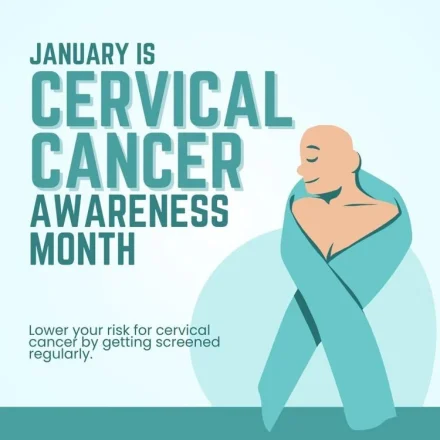
As January is Cervical Cancer Awareness Month, the MOH encourages all eligible women to get screened and urges parents to make sure their daughters receive the HPV vaccine.
SOURCE: VANUATU DAILY POST


