
There can be no genuine solidarity when half the population is marginalised, and no sustainable development when entire communities are excluded from opportunity.
Melanesian Spearhead Group (MSG) Program Manager for Trade, Investment and Economic Development Joshua Kaile made this point when he opened a three-day Regional Validation Workshop on the Gender Equality and Social Inclusion Framework for the MSG region on Wednesday.
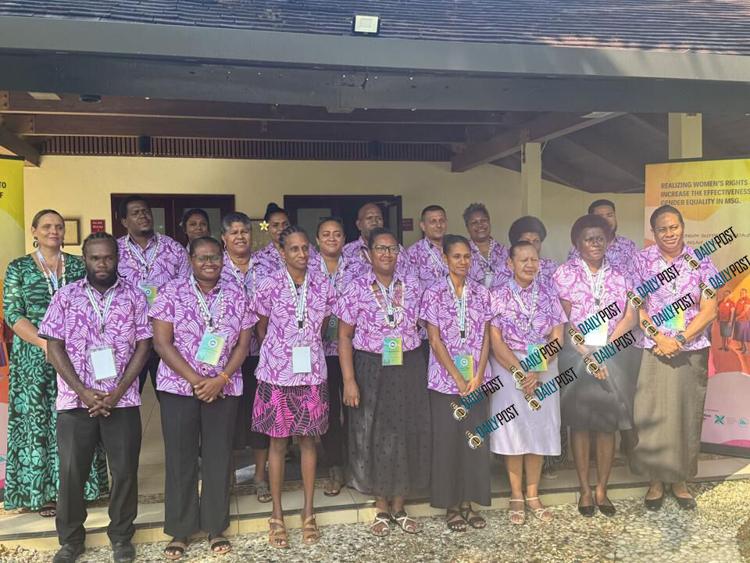
About 20 participants from MSG members — Vanuatu, Papua New Guinea, Solomon Islands, Fiji and the Front de Libération Nationale Kanak et Socialiste (FLNKS) — took part in the workshop, which ends today.
Kaile said it is with honour and a strong sense of purpose that the gathering convenes, noting that while Melanesia is rich in culture, biodiversity and people, the benefits of regional integration and development have not always been shared equally.
He said vulnerable groups continue to face structural barriers that limit participation in political, economic and social life.
“The data speaks for itself. Women remain underrepresented in parliaments, boardrooms and negotiating tables,” he said.
“Findings from credible institutions show that rates of gender-based violence across the subregion remain among the highest in the world.
“Persons with disabilities continue to be excluded from policy, programming and infrastructure.
“Social exclusion continues to undermine human dignity, which lies at the heart of the MSG founding vision. This situation calls for urgent action.”
Kaile said two policy instruments have been developed to address these issues, not as documents to be shelved, but as practical and actionable roadmaps for change.
The workshop marked a key milestone, bringing together extensive consultations, technical work and community voices from across the region.
“Today, those voices are brought into this room with a key question: Does this framework reflect the aspirations, needs and realities of all Melanesians? Your role is critical.
As representatives of your countries, you are responsible for reviewing this framework with a constructive and rigorous approach — to affirm strengths, address gaps and strengthen areas that need improvement,” he said.
He said MSG was built on solidarity, sovereignty and the wellbeing of its peoples.
Kaile said the MSG Secretariat is committed to mainstreaming the framework across its programmes, policies and institutional operations, and to supporting its implementation with accountability and transparency.
He also called on member states and development partners to do the same.
On behalf of the MSG Secretariat and member countries, gratitude was extended to participants for making the journey to attend.
Their presence reflects collective political will and shared commitment to ensuring no one is left behind.
Program Manager of Pacific Women Lead at the Pacific Community (SPC), Sala Tupou, said the partnership reflects a shared understanding that gender equality and social inclusion are not external agendas but fundamental priorities requiring a sub-regional approach.
Tupou asked participants to bring to their deliberations the spirit of Melanesian kastom — collective wisdom, respect and deep listening.
“Let us be bold enough to identify the gaps,” she said. “Let us be generous in recognising progress already made, and resolute in committing to the work ahead.
Validation of this framework is not an ending; it is a beginning. What is affirmed and strengthened here will shape the lives of women, girls and future generations across Melanesia for years to come.”
SOURCE: VANUATU DAILY POST


