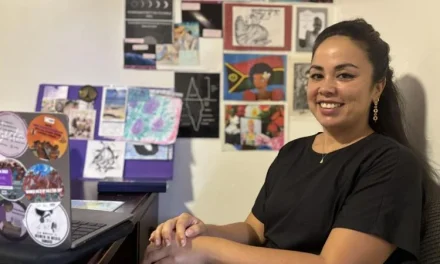
Shirley Abraham’s journey into leadership did not begin with a clear path or predetermined plan. Like many young people in Vanuatu, she once believed the best career options lay in traditionally respected professions such as law or aviation.
“Before, I thought becoming a lawyer or a pilot was the best job you could find,” she recalls.
But as fate would have it, Shirley found her calling in the Non-Governmental Organisation (NGO) sector — a world she might not initially have envisioned.
“I realised I made a good decision. It is truly rewarding to see positive change happening in people’s lives,” she says with a sense of fulfilment.
This realisation transformed her outlook, showing her that the impact one could make in community development far outweighed the prestige of her earlier aspirations.
Working in the NGO sector, however, was not without challenges.
Shirley encountered deeply ingrained cultural norms and gender biases that still shape leadership roles in Vanuatu.
She explains, “When you work with male-dominated committees or decision-making platforms, especially as a woman, our culture says women have limitations in leadership.”
This candid admission reveals the social barriers many women face — barriers not just of policy or procedure, but of mindset and tradition. Yet Shirley refuses to be confined by these limitations. Over time, she has seen these barriers begin to crumble.
“The barriers start to change when you bring your best ability and effort. The field begins to support your growth instead of holding you back,” she reflects — a testament to how resilience and excellence can shift even the most entrenched perspectives.
Shirley’s leadership extends beyond her personal journey. She actively participates in mentoring networks designed to support young women as they navigate their own paths.
“I am part of mentor networks where we help young women grow and become leaders in their communities,” she shares, underscoring her belief that leadership is a collective responsibility.
“For Shirley, mentoring is not just about passing on advice but about building a future generation of confident women who will carry forward the torch of change.
Her role as Chief Executive Officer (CEO) of the Vanuatu Association of NGOs (VANGO) stands as a milestone in her career. When Shirley joined, the organisation was in a dormant state, struggling with funding and purpose.
“When I joined, there was no money. I took the risk to find funding and even pay my own salary,” she remembers.
This bold move not only revived VANGO but also highlighted her determination to lead by example.
Shirley’s success in revitalising the organisation reflects her leadership style — grounded in risk-taking, perseverance, and a commitment to service.
One of the key issues Shirley champions is the importance of women’s representation in leadership roles, particularly on boards.
She argues, “Women bring a special contribution because they offer the female perspective in decision-making.”
She adds that this contribution is not only social or cultural but also biological and scientific, recognising the unique roles women play in society. Her perspective challenges the often narrow view of leadership as a male domain and underlines the value of diverse voices for stronger, more inclusive decision-making.
Confidence emerges as a central theme in Shirley’s philosophy. She encourages women, men, and young people alike to believe in their capabilities.
“You have to have confidence — sometimes people might not immediately see the greatness in you, but you must be confident enough to take on the tasks given to you,” she says.
This message resonates in a society where traditional expectations may hold many back from realising their full potential. Shirley’s words serve as a call to embrace self-belief and courage as tools for success.
Looking to the future, Shirley expresses hope for Vanuatu’s women to recognise their worth and make their contributions visible.
“I want them to trust their abilities, their contributions, and their technical expertise — and to make themselves visible,” she states with conviction.
For Shirley, visibility is not merely about recognition but about claiming space in national conversations and decision-making processes.
Despite her modern outlook, Shirley holds a profound respect for Vanuatu’s culture and traditions. “Vanuatu is unique; people are conservative and traditional, which is something to be proud of,” she observes.
This acknowledgment reflects her nuanced understanding that progress and tradition are not mutually exclusive but can coexist in ways that strengthen the nation’s identity. She recognises the challenges inherent in this balance but views them as part of Vanuatu’s unique story.
Reflecting on her personal journey, Shirley wishes she had embraced independence earlier.
“I would have started being independent at 19 or 20,” she says thoughtfully.
She notes that in Vanuatu’s culture, many young adults live with their parents well into their twenties, which can delay the development of self-reliance.
Shirley would have liked to start a business and stand on her own feet sooner — advice she now shares with young people seeking to forge their own paths.
Her guidance to the next generation of women is both practical and visionary: “Think outside the box. With digitisation and technology, find innovative ways to advance your careers in this new era.”
In a rapidly changing world, Shirley urges women to seize new opportunities and harness modern tools to propel themselves forward, breaking free from traditional constraints.
Through all her roles and experiences, Shirley Abraham embodies resilience and empowerment. Her story is not just one of personal achievement but of transformation that ripples through communities and institutions. By breaking barriers, mentoring future leaders, and revitalising key organisations, she is forging a path for Vanuatu’s women to follow — a path illuminated by confidence, courage, and conviction.
Shirley’s journey reminds us that leadership is not defined by gender but by the willingness to serve, take risks, and inspire others.
As she continues to build her legacy, Shirley Abraham stands as a powerful symbol of what can be achieved when barriers are confronted and broken — and when women trust in their abilities to shape the future of their nation.
This feature story is part of a 13-week series presenting 26 Vanuatu women who serve on boards, profiled in Balance of Power’s book Nation Builders III.
The series is the outcome of a six-month partnership between Balance of Power and the Vanuatu Daily Post to recognise women leaders, build awareness of women’s leadership in Vanuatu, and encourage wider acknowledgement of their contributions across development and decision-making spaces.
SOURCE: VANUATU DAILY POST